
How to clean a stainless steel pan without damaging the finish
Start with warm soapy water, then tackle stuck-on food and burnt grease with manufacturer-supported methods that protect your stainless pan’s finish.
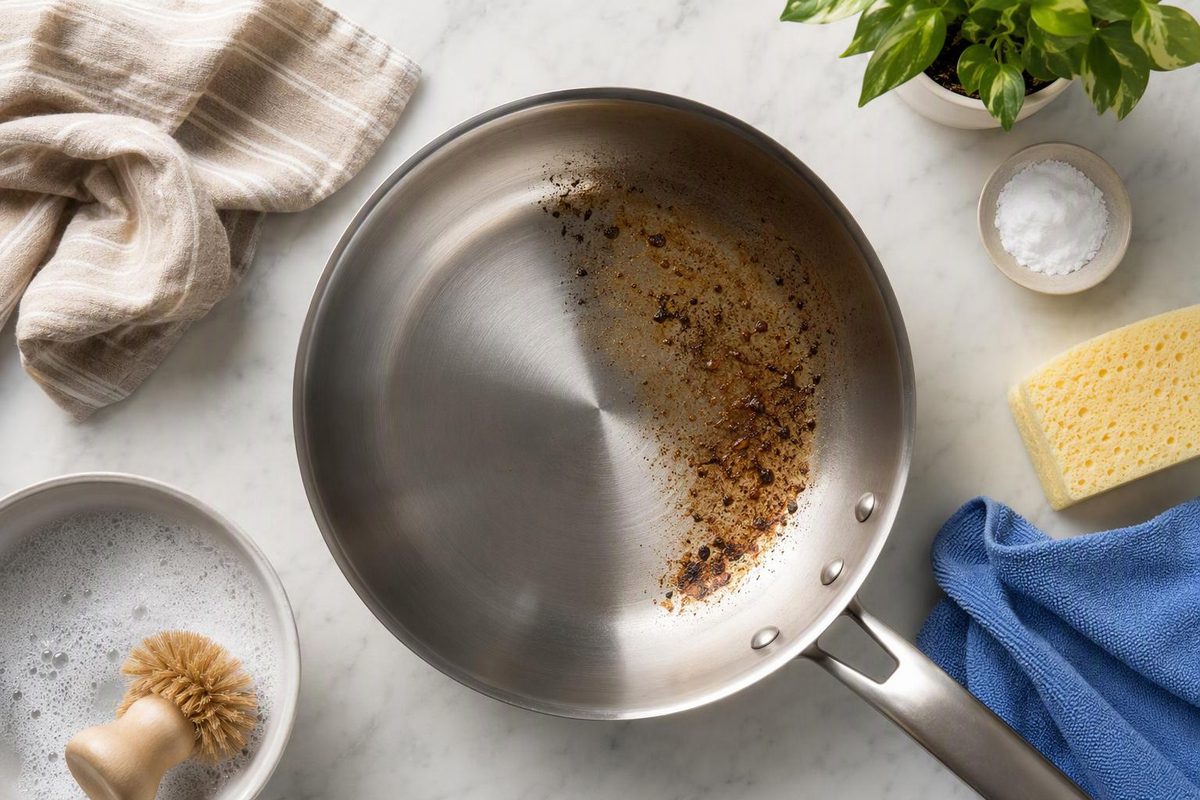
By Cleaning Notes
Let the pan cool, soak it in warm soapy water, then wash with a soft sponge, rinse and dry. For residue that remains, loosen burnt food with baking soda and water, or use a cookware cleaner approved for your pan—not a harsher scrubber.
These steps are for an uncoated stainless steel cooking surface. If your pan has a nonstick or ceramic coating, follow that coating’s care instructions instead. Check your pan’s specific guide before using a cleanser; All-Clad notes that care varies by material and collection.
Start with the everyday wash
You’ll need dish soap, a soft sponge or cloth, and a drying towel.
- Let the pan cool before adding wash water. Don’t put a hot pan under cold water: the sudden temperature change can cause warping.
- Rinse away loose food with warm water. Add warm water and dish soap, then leave stuck-on residue to soften. There’s no need to force it off immediately.
- Wash with a soft sponge or cloth. Clean the cooking surface, rim, handle area and exterior. If needed, use a nylon pad that both its label and your pan’s care guide permit for stainless steel.
- Rinse thoroughly and towel-dry. Drying immediately helps prevent water spots.
This follows All-Clad’s stainless steel cleaning routine. Cuisinart’s Classic Collection Stainless Colour Series guide also recommends a sponge or soft cloth and warns that steel wool and metal pads make coarse scratches.
If food is burnt onto the cooking surface
Try loosening it before scrubbing harder. For uncoated stainless steel, All-Clad recommends baking soda, water and a wooden spoon:
- After the pan has cooled, sprinkle baking soda generously over the burnt area.
- Add enough water to cover the residue and bring it to a boil. Stay with the pan and don’t let it boil dry.
- Turn off the heat. Carefully loosen the softened food with a wooden spoon, keeping clear of hot water and steam. Use an oven mitt if you need to hold the hot handle.
- Let the pan and liquid cool before emptying it. Finish with the everyday wash above.
If residue remains, repeat gentle cleaning or move to an approved cookware cleanser rather than scraping with a knife or metal scouring pad.
If a brown grease film still remains
All-Clad lists cookware cleansers, including Bar Keepers Friend, for burnt fat, protein marks and charred food. Use only a product permitted by your pan’s care guide and labeled for the surface you’re cleaning.
Follow the cleaner’s own application and rinse times. For example, Bar Keepers Friend Cookware Cleanser & Polish directs users to wet the surface, apply the powder, rub gently with a wet cloth or sponge, and rinse thoroughly within one minute. It also says not to leave the product longer or rub harder than necessary. Don’t treat a cleanser paste as an overnight soak.
Use one cleaning product at a time and rinse it away before changing methods. That same product’s safety directions prohibit mixing it with other chemicals, including bleach or ammonia, and advise gloves for prolonged use or sensitive skin.
Don’t mistake every mark for leftover food
If food is gone but a rainbow tint or cloudy white spot remains, it may be discoloration or a mineral deposit rather than cooking residue. For its stainless pans, All-Clad recommends:
- Blue or rainbow discoloration: wipe with white vinegar using a soft cloth or sponge.
- Cloudy hard-water spots: boil a solution of equal parts white vinegar and water.
Check your own pan’s instructions first, and rinse after treatment. If boiling the solution, stay with the pan, don’t let it boil dry, and let it cool before emptying. These are stain-removal steps, not substitutes for washing away cooking residue.
Protect the finish—and know when to stop
Skip steel wool, metal scouring pads and oven cleaner for this routine. All-Clad also warns against harsh detergents and detergents containing bleach or peroxide.
If further scrubbing creates scratches, stop. If you see pits, a warped base or other apparent damage rather than residue, check with the pan manufacturer before trying stronger chemicals or restoration methods. The aim here is a clean cooking surface, not a showroom polish.